This page was created by Helena Colindres. The last update was by Jennifer Fraser.
Francis La Flesche (1857-1932)
Francis La Flesche is one of the first Indigenous ethnologists, anthropologists, and musicologists in the history of American academia. He was born in December of 1857 to Joseph and Tainne La Flesche on an Omaha reservation. His father, Joseph, was half French and Omaha, and was a chief of the Omaha people. He sent his children to the Thurston County Presbyterian English Language school and forbade them from taking part in Omaha traditional ceremonies in an attempt to prepare them for success in the colonial state, i.e. the United States. Despite Francis’ father’s attempts to keep him from taking part in traditional ceremonies, he still found ways to take part in them, following the Omaha spiritual beliefs, and loving the culture of his people. His relationship with the Omaha culture as a child is a big reason why he conducted his research and collaborated with ethnologist Alice C. Fletcher later on in life.
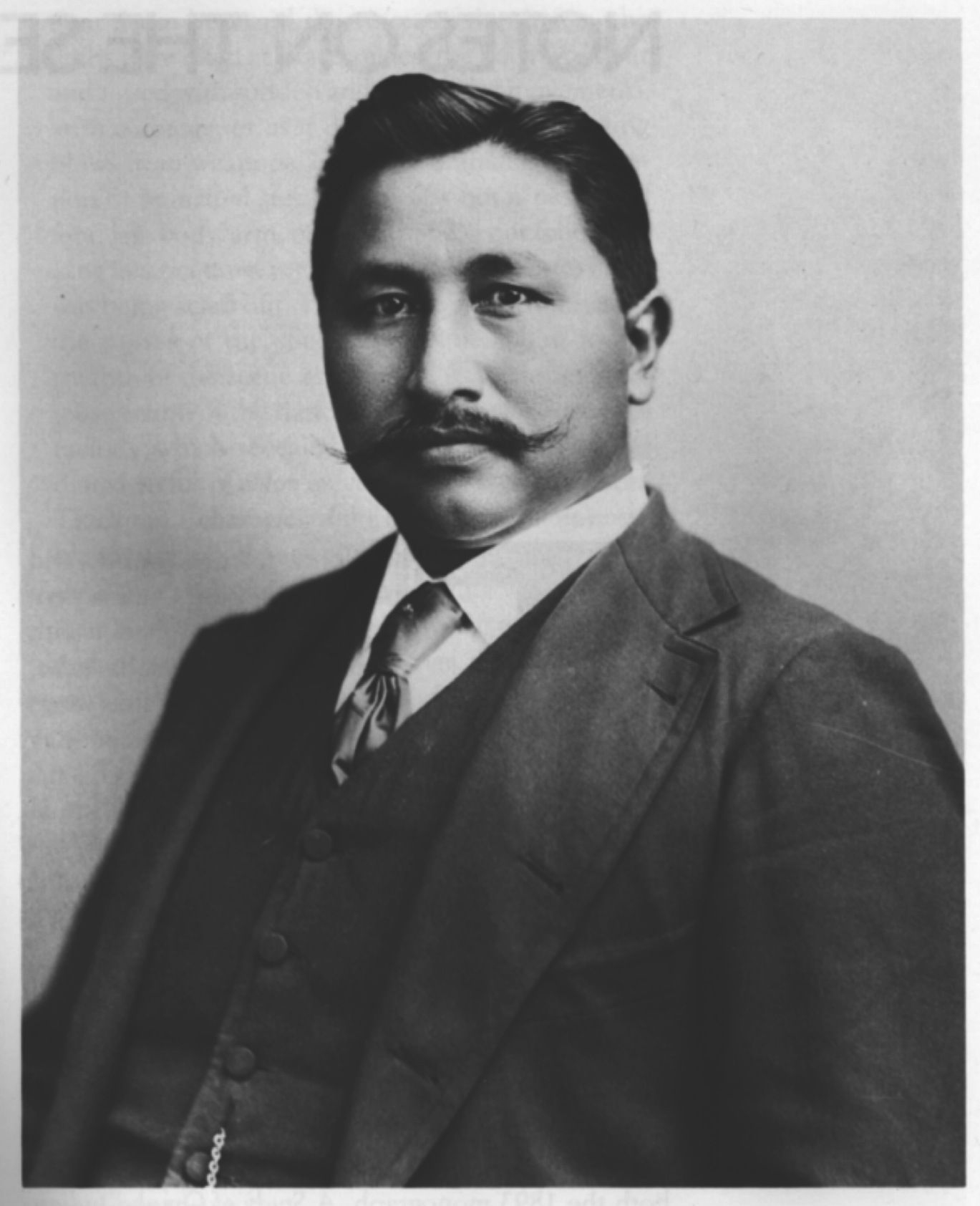
La Flesche studied law at the National University Law School in Washington, D.C., while he worked as a clerk for the Bureau of Indian Affairs. He worked alongside his sisters who were civil rights leaders and fought for the Omaha and Ponca lands in Nebraska. Francis met Alice Fletcher while he was on tour with his sister, Susette, and her husband, Thomas H. Tibbles, in 1879. He served as an interpreter while on that tour and went on to do similar work for the Senate Committee on Indian Affairs in 1881. It was around this time that he proposed to Fletcher a project on writing an ethnography on the Omaha tribal ceremonies. This ethnography, A Study of Omaha Indian Music, published in 1893 would become one of themost important salvage ethnographies in the fields of musicology, ethnology, and anthropology.
La Flesche had a very different experience in his work. He aimed to document these ceremonies so that future generations would have access to these materials. He had a great stake in this work due to the fact that his father did not want him nor his siblings to have a direct relationship to the Omaha culture:, his father wanted for his children to assimilate to the colonizer’s culture. La Flesche did this work by documenting and recording Omaha cultural ceremonies in as much detail as possible.
La Flesche, Fletcher, and Fillmore worked together on A Study of Omaha Indian Music from 1880-1910. La Flesche did most of the research on the Osage and Omaha language, rituals, and music. Fletcher published it under her name but stated that it was in collaboration with La Flesche and Fillmore.
La Flesche went on to do much more of this work on his own. He started his work on a larger Omaha monograph in 1911. He published an Osage study which consisted of four volumes published from 1921-1930 and worked as an ethnologist for the Smithsonian Bureau of American Ethnology from 1910-1929. Not only was he an ethnologist, he also became the president of the Anthropological Society of Washington from 1922-1923. In addition, he received an honorary doctor of letters from the University of Nebraska and was a fellow of the American Association for the Advancement of Science.
La Flesche accomplished many things as an Omaha man, an academic, and as a researcher. For example, he pioneered the technique of continuous recording which consisted of using two recording devices to avoid having breaks in the cylinder recordings. His recordings are in the Library of Congress along with his extremely detailed documentation. Another is that he was one of the few Indignepus people who had some say on how academics talked about his people and what was to be recorded. He was an inspiration to many Indigenous academics and is still highly revered in many different fields.
This page has paths:
- Individuals Jennifer Fraser
- Individuals Jennifer Fraser


