Art in the Archives of Oberlin CollegeMain MenuIntroductionArchitecture in Visual WorksDrawings and PrintsPaintingsPhotographic ObjectsSculptureTextilesOberlin College Archives
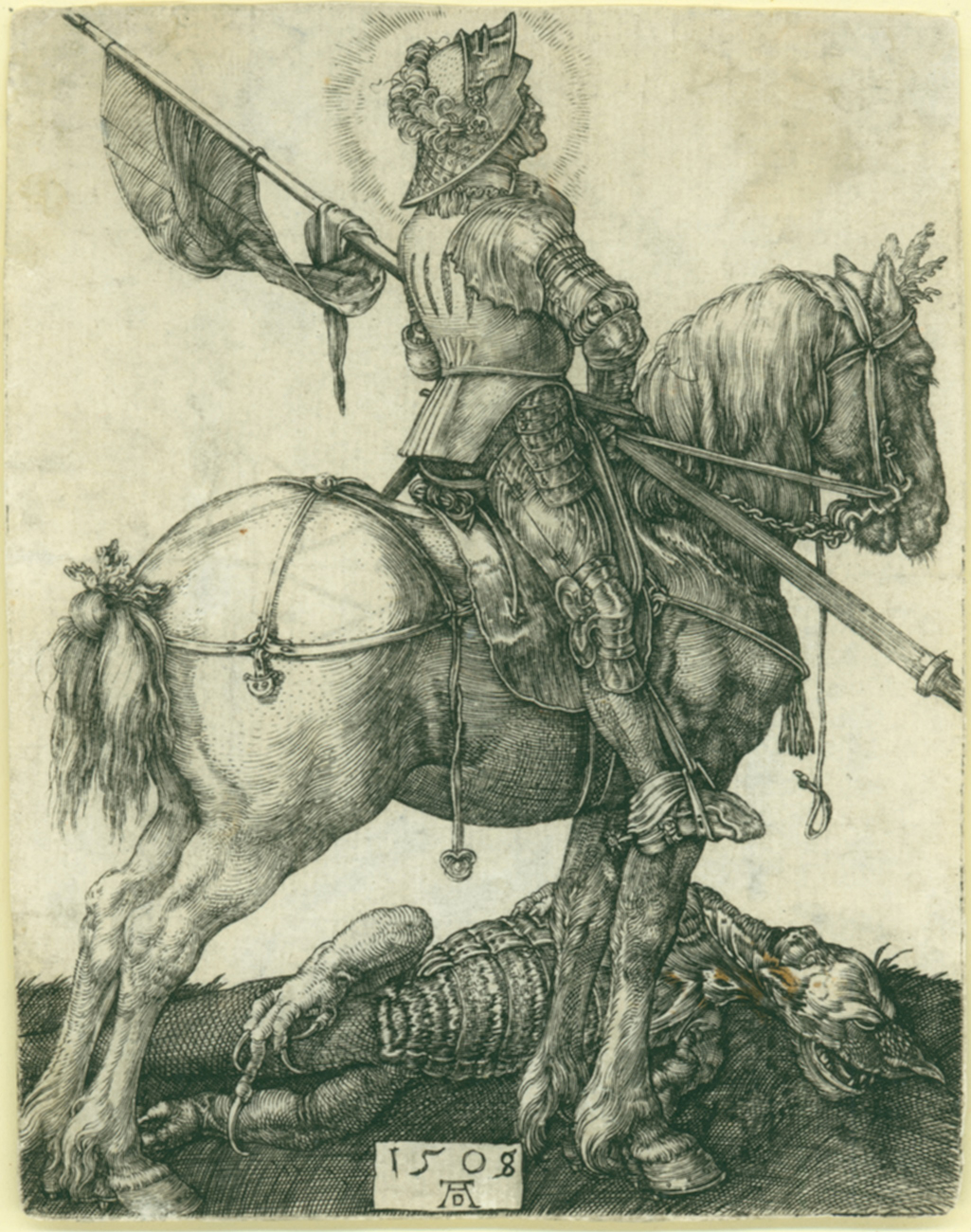
St. George on Horseback
1media/1968.73-pres_thumb.jpg2021-04-11T22:11:28+00:00Anne Cuyler Salsich, Oberlin College Archives65340b1e79f9df03d291b8de171f6479ab6abb16305St. George on Horseback by Albrecht Durer, 1508plain2021-04-11T22:26:13+00:00Durer, Albrecht (German, 1478-1528)15084 5/16 x 3 3/8 in.Allen Memorial Art MuseumAllen Memorial Art Museum, Oberlin Collegeengraving1968.73Gift of the Max Kade FoundationAnne Cuyler Salsich, Oberlin College Archives65340b1e79f9df03d291b8de171f6479ab6abb16
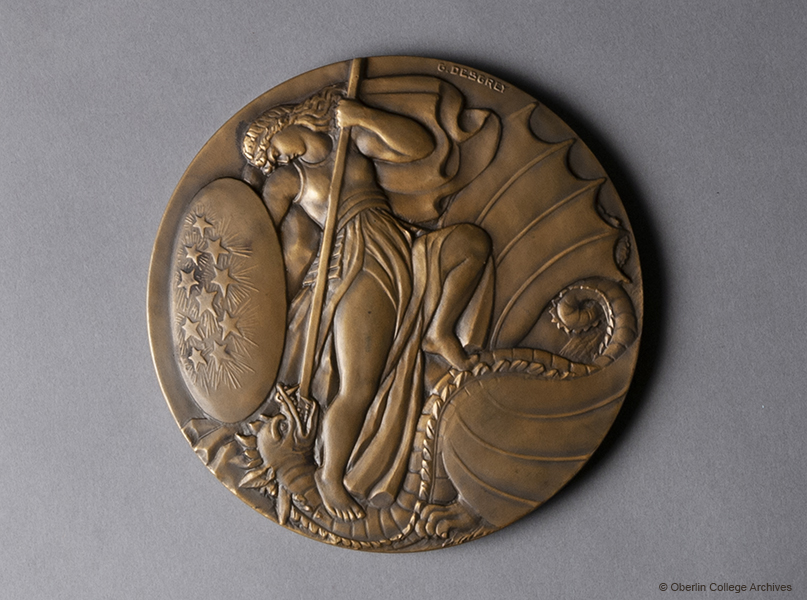
Title/Subject: Fédération Interalliée des Anciens Combattants (FIDAC) medal Creator: Georges Ernest Desgrey (French) Date: 1936 Type: peace medal Medium: bronze Format: 4 1/4 in. diameter, 3/8 in. thick Collection: Objects Collection (RG 35)
The Fédération Interalliée des Anciens Combattants(The Interallied Federation of War Veterans Organisations), or FIDAC, commissioned this bronze medal, struck in 1936. It was designed by French sculptor and medallist Georges Ernest Desgrey, who exhibited at the Salon des Artistes Français in Paris, where he was a member. He was awarded a silver medal at the 1937 Exposition Universelle.
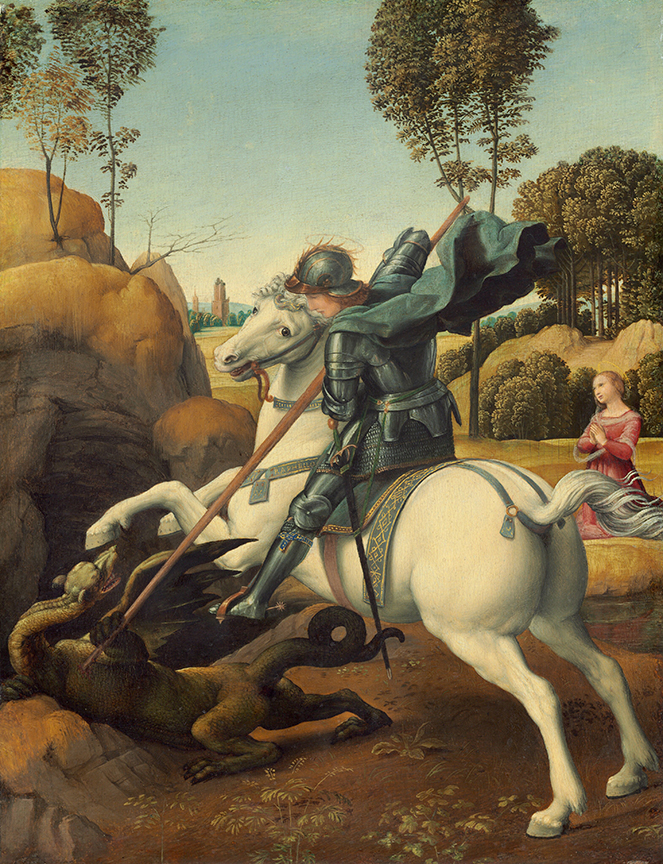
The design of the medal references the legend of St. George, typically depicted astride a horse slaying a dragon that demanded human sacrifice and, when St. George happened by, a princess. In the medal's imagery a female warrior (possibly the Greek goddess Athena) on foot slays the monster with a lance, holding a shield with ten stars.
The FIDAC was an international federation of World War I veterans working to promote a proactive peace, having fought in the first worldwide conflict with unprecedented wartime deaths. In this medal the dragon can be interpreted as the forces of evil and war, while the female warrior represents the determination of the Allied powers to win the battle for peace.
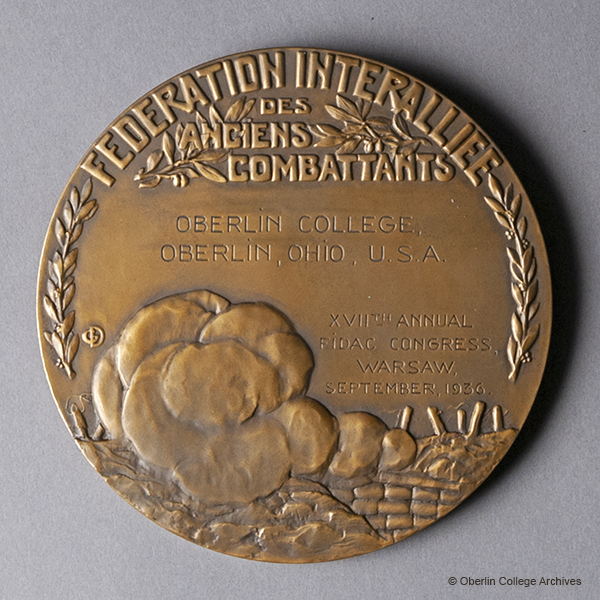
The reverse side of the medal is equally compelling. Here the grim realities of World War I combat are depicted, with a trench, disordered barbed wire fence, and a dominant cloud of poisonous gas. The artist cast his name or initials on both sides of the medal. It rests in the original red box stamped with the FIDAC seal, padded and lined with velvet and satin.
The federation held its 17th annual congress on September 19, 1936 in Warsaw, at which the medal was awarded to three colleges, Oberlin College among them. Oberlin President Ernest Hatch Wilkins (served 1927 to 1946) received the medal, awarded for the College's "programme of which contributed greatly to international understanding and friendship," as stated on the accompanying certificate (no longer extant).
The medal was delivered to the College on April 30, 1937 by H.W. Colmery, graduate in the class of 1913 and Commander of the American Legion, a member of the federation. At the award ceremony, Colmery warned of the situation in Europe, with the militarization of the Rhine and the conquest of Ethiopia. He stated that there might be such a thing as "justifiable war." World War II broke out two years later in 1939, when Germany invaded Poland.
Sources Benezit Dictionary of Artists, Oxford Art Online, accessed 1/13/2021. "Oberlin Receives FIDAC Medal for Peace Promotion Activities," Oberlin Alumni Magazine, vol. 33, no. 7 (May 1937). St. George's Society of New York website, accessed 1/16/2021. St. George and the Dragon by Raphael, National Gallery of Art, accessed 1/16/2021.