Bust of John Brown
1 media/OBJ_0189_2mod_thumb.jpg 2020-08-25T18:46:06+00:00 Anne Cuyler Salsich, Oberlin College Archives 65340b1e79f9df03d291b8de171f6479ab6abb16 30 7 Bronze bust by Joseph-Charles de Blézer plain 2021-01-29T17:04:30+00:00 de Blézer, Joseph-Charles (Belgian-French, 19th century) 1870 15 x 11 in. bronze sculpture Gift of Geoffrey Blodgett Objects Collection (RG 35), Oberlin College Archives The photographs provided here by the Oberlin College Archives for the College Library server may be downloaded for one-time personal or classroom use, if not for financial gain. For all other uses of Archives' photographs--including reproduction in a brochure, scholarly article or book, or other publication (digital or otherwise)--users must seek permission from the Oberlin College Archives (email: archive@oberlin.edu; telephone 440-775-8014). Archives URL: http://www.oberlin.edu/archive/. Images from the Oberlin College Archives are protected by U.S. Copyright law. Acc. 1979/017; 1999/127 Anne Cuyler Salsich, Oberlin College Archives 65340b1e79f9df03d291b8de171f6479ab6abb16This page is referenced by:
-
1
2020-08-14T19:08:04+00:00
Bust of John Brown
81
plain
2021-01-29T17:06:50+00:00
Title/Subject: John Brown (American, 1800-1859)
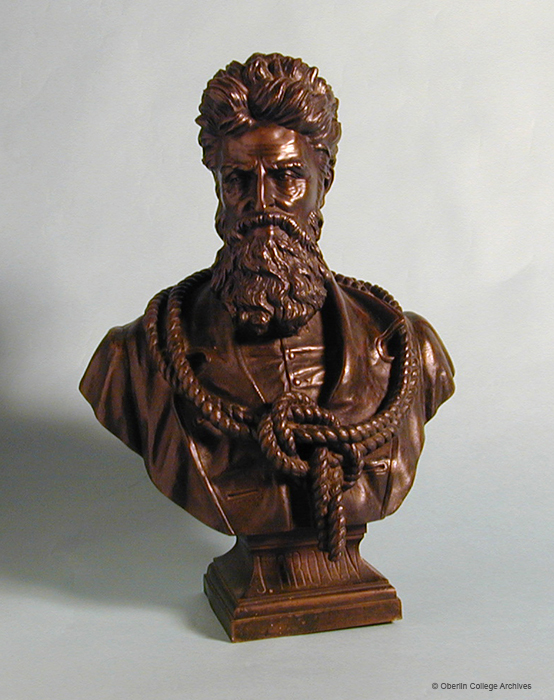
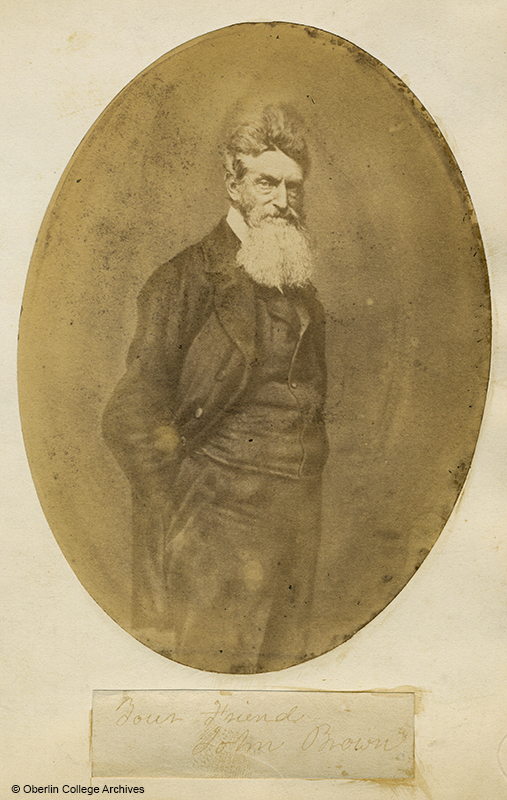
Abolitionist John Brown was born in Torrington, Connecticut on May 9, 1800, the son of Owen and Ruth Brown. The Brown family moved to Hudson, Ohio when John was five years old. Owen Brown served as a member of the Oberlin Collegiate Institute's (Oberlin College) Board of Trustees from 1835 to 1844. During 1840-41 John Brown failed in an attempt to negotiate with the Oberlin Collegiate Institute to settle his family on land known as the Gerrit Smith-Oberlin Virginia lands.
Artist: Joseph-Charles de Blézer (Belgian-French, 19th century)
Date: 1870
Type: sculpture
Medium: bronze
Dimensions: 15" h x 11" w
Collection: Objects Collection (RG 35)
Location: Archives and Special Collections Goodrich Room
In 1856, Oberlin College students Samuel S. Burdette and Henry P. Kinney joined the fiercely abolitionist John Brown in the conflict over slavery in the Kansas territory, in which statehood as a free soil or slavery state was at stake. On both sides armed citizens rushed to settle in Kansas to tip the balance and strengthen their position on slavery and win political power for the North or the South.
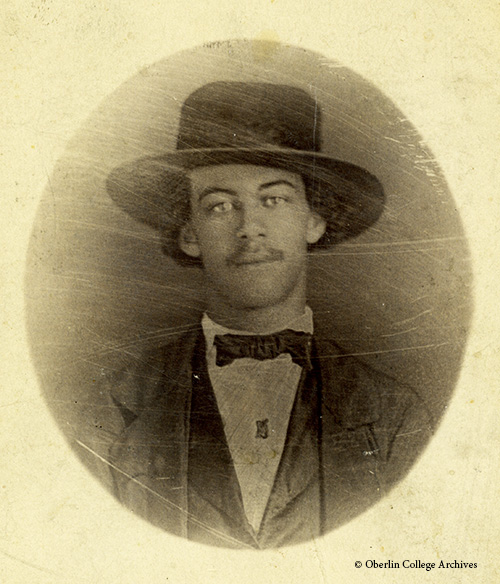
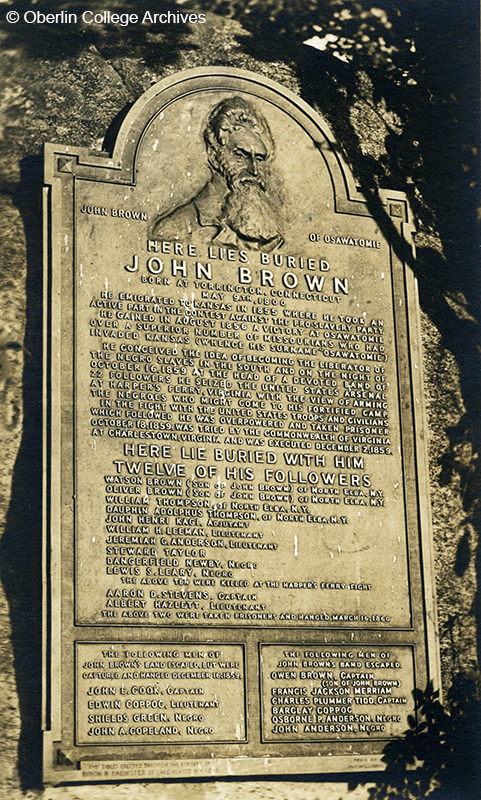
On October 16, 1859, Oberlinians John A. Copeland, Lewis Sheridan Leary, and Shields Green (a runaway slave) participated in Brown's raid on the Harpers Ferry arsenal. John Brown was executed by hanging, referenced by the rope on the sculpture, outside of Charlestown, Virginia, on December 2, 1859.
Most Oberlinians warmly sympathized with Brown and his followers. On the day of Brown's execution the bell tolled for an hour, and a mass-meeting in the Chapel was addressed by the leading citizens and faculty members. Leary died of a wound received in the raid, and Copeland and Green were hanged on December 16, 1859. A monument erected in 1860 to honor the three Oberlin men who lost their lives at Harpers Ferry can be found in the Martin Luther King, Jr. Park on Vine Street in Oberlin.
The bronze bust of John Brown was created by the sculptor Joseph-Charles de Blézer in 1870. The artist, a student of Jean Baptiste Clésinger (French painter and sculptor), exhibited a colossal bust in plaster of Brown at the Salon in Paris in 1870. It is likely that reduced casts were made, including this one, after the plaster original. Oberlin College trustee John Stern (class of 1939) purchased the bust in Paris in 1976 and loaned it to the College. It remained in storage until the late historian Professor Geoffrey Blodgett (class of 1953) received it as a gift from Mr. Stern and displayed it in his office for 20 years. In 1999 the College Archivist accepted the bust for public viewing to celebrate Oberlin's strong anti-slavery holdings and heritage.
Source
Robert Samuel Fletcher, A History of Oberlin College from Its Foundation through the Civil War, vol. 1 (Oberlin, OH: Oberlin College, 1943).
Related Collections
Photographs: Faculty, Staff, Trustees, and Others (RG 32/3)
Geoffrey T. Blodgett Papers (RG 30/263)
Archives Museum Collection (digital collection)
Oberlin and the Civil War (digital collection)
The Oberlin Sanctuary Project (digital exhibit)